|
|
|
| | Arts Calendar / July 4 / Exhibitions |
|
|
|
| Alexander Daineka: Graphics |
|
|
|
|
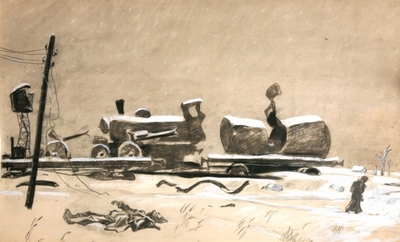 Alexander Daineka's graphics exhibition from the Kurskaya gallery's collection is timed to the 110th anniversary of the prominent master. Graphic lists, many of which have never been exhibited in Russia, are marked with a variety of techniques, manners and styles but they are united by the unique Daineka's "supply of energy". Alexander Daikena (1899-1969) is mostly known as a painter and monumentalist. However, graphics plays a very important role in his creative works being in many ways his style forming element. This exhibition from the Kurskaya gallery possessing the largest collection of the master's works and keeping about one thousand of his graphic lists, allows to see Daineka from a different perspective. Different sides and stages of Daineka's creative career from 1920 to 1960 are reflected in the pictures made during his student years, mature years while working for magazines, in business trips and voyages to America and Western Europe. Among 150 graphic lists are military drafts, sketches, outlines on location, studies of pictures, pure graphics. Alexander Daineka's graphics exhibition from the Kurskaya gallery's collection is timed to the 110th anniversary of the prominent master. Graphic lists, many of which have never been exhibited in Russia, are marked with a variety of techniques, manners and styles but they are united by the unique Daineka's "supply of energy". Alexander Daikena (1899-1969) is mostly known as a painter and monumentalist. However, graphics plays a very important role in his creative works being in many ways his style forming element. This exhibition from the Kurskaya gallery possessing the largest collection of the master's works and keeping about one thousand of his graphic lists, allows to see Daineka from a different perspective. Different sides and stages of Daineka's creative career from 1920 to 1960 are reflected in the pictures made during his student years, mature years while working for magazines, in business trips and voyages to America and Western Europe. Among 150 graphic lists are military drafts, sketches, outlines on location, studies of pictures, pure graphics.
Tretyakov Gallery at Krymsky Val  |
|
|
|
|
| American Artists from Russian Empire |
|
|
|
|
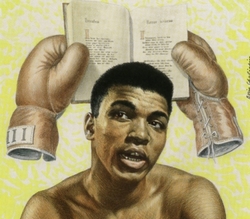 A large-scale international project with a collection of rare items is dedicated to the Russian contribution to the USA's art. The project presents quite a number of artists of different generations who happened to move to America in the early XX century. Most compositions by 40 artists are exhibited for the first time in Russia. The exhibition reveals both a profile of "Russian artistic America" and its most prominent personas. The project's time-span covers more than 50 years (from 1913's cubofuturistic painting "Interior of the 4th Dimension" by Max Weber to 1978's bright red object "Model for Elevation" made of steel by Alexander Liberman. The exhibition aims to remind of the Russian immigrants' contribution into formation of the USA's avant-garde and abstract expressionism that turned New York into one of the world's art capitals in the late XX century. A large-scale international project with a collection of rare items is dedicated to the Russian contribution to the USA's art. The project presents quite a number of artists of different generations who happened to move to America in the early XX century. Most compositions by 40 artists are exhibited for the first time in Russia. The exhibition reveals both a profile of "Russian artistic America" and its most prominent personas. The project's time-span covers more than 50 years (from 1913's cubofuturistic painting "Interior of the 4th Dimension" by Max Weber to 1978's bright red object "Model for Elevation" made of steel by Alexander Liberman. The exhibition aims to remind of the Russian immigrants' contribution into formation of the USA's avant-garde and abstract expressionism that turned New York into one of the world's art capitals in the late XX century.
Tretyakov Gallery at Krymsky Val |
|
|
|
|
| Andrea Mantegna: Holy Family |
|
|
|
|
One-painting exhibition. Andrea Mantegna (1431-1506) was one of the foremost north Italian painters of the 15th century. A master of perspective and foreshortening, he made important contributions to the compositional techniques of Renaissance painting. From 1460 Mantegna worked at Mantua as court artist to the Gonzaga family. He is best known for the altarpieces and secular works he painted for them, but he also painted a limited number of extraordinary small pictures for private devotion. Like "Holy Family", these were often painted in distemper on a fine cotton support, and they are delicate in execution. This painting dates from the last decade of Mantegna's career. Its composition is based on classical funerary reliefs. It may have hung in the church of the Spedale degli Incurabili in Venice in the seventeenth century.
Pushkin Fine Arts Museum |
|
|
|
|
|
|
Historian Alexander Vasiliev culled for Zurab Tseriteli Gallery a considerable collection of art déco items from Russian Fashion houses in Paris. There are about 200 items (clothes, bags, shoes, headdresses) including ones from Nazim Mustafaev's private collection. The collection was already exhibited in Hong Kong, Frankfurt, Paris. Russian version of the exhibition is added by historical photographs, lithographs and films of the 1920s.
Zurab Tsereteli Art Gallery |
|
|
|
|
|
|
A book is the most widespread system of signs to express the author's idea. In modern culture it is becoming a symbolic object; it is like a complex organism combining text and image. "Conversation. Silentium!" features mainly grafics – the closest to printing kind of fine arts. The exposition culled from the Moscow Museum of Modern Art's collections presents works by different artists including Ilya Kabakov, Alexandra Mitlyanskaya, Ryuseki Morimoto, Masha Sha, Theo Balden, Werner Henning, Andrey Voznesensky, Nikita Alekseev, Irina Korina and other.
Moscow Museum of Modern Art |
|
|
|
|
| David Lynch. Retrospective. The Air is On Fire (USA) |
|
|
|
|
Who knew that a movie director David Lynch was also a prolific artist? Lynch's photography, which can more or less be divided into three categories: 'Nudes', 'Factories' and 'Melting Snowmen'. This being David Lynch, the nudes tend towards the uneasy and disturbing, while the snowmen and the factories tend to be oddly calm and relaxing. In a series called Distorted Nudes, he has digitally manipulated Victorian erotic photographs into strange shapes, some of which resemble the brutalist torsos of his hero, Francis Bacon. Within Fashion and Style in Photography 2009.
Ekaterina Cultural Fund |
|
|
|
|
|
|
Moscow Museum of Modern Art hosts “Etude to Art Object”, a large-scale experimental display focused on works by Russian artists from the museum’s permanent collection. The display consists of more than three hundred works: from traditional painting, graphics, sculpture and photography to kinetic objects and video installations. Among the artists are: AES+F, Alexander Archipenko, Konstantin Batynkov, Leonid Borisov, Pavel Chistyakov, Semyon Faibisovich, Andrey Goncharov, Eduard Gorokhovsky, Andrey Grositsky, Francisco Infante, Vyacheslav Koleychuk, Valery Koshlyakov, Oleg Kulik, Mikhail Larionov, Igor Makarevich, Kazimir Malevich, Tatyana Nazarenko, Timur Novikov, Viktor Pivovarov, George Pousenkoff, Leonid Purygin, Oskar Rabin, Aidan Salakhova, Vasili Shukhaev, Sergey Shutov, Igor Snegur, Vinogradov and Dubosarsky, Dmitry Zhilinsky, and many others. The design of the display was created by Boris Bernaskoni, one of the most promising young architects in Moscow, praised for his singular approach to exhibition architecture. His stylish and purist solution helps to clarify the structure of the project and guides the visitor on the way from “Etude to Art Object”.
Moscow Museum of Modern Art |
|
|
|
|
| Francesca Leone: Beyond their Gaze (Italy) |
|
|
|
|
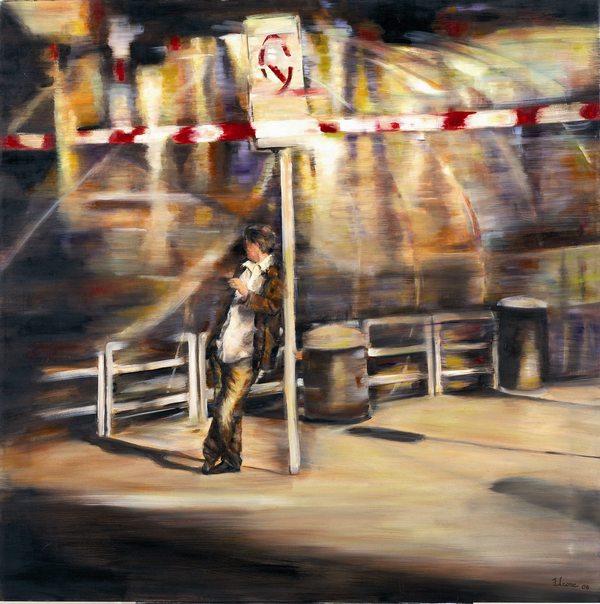 Moscow Museum of Modern Art (Gallery "Zurab") hosts the first personal Russian exhibition of Francesca Leone whose paintings take a special place in the Italian art. "Beyond their Gaze" project presents about 30 large-size paintings that strike even artistically sophisticated audience by the thoroughly polished technique, conscious concentration of chromatic transitions, absolutely refine emotions combined with a powerful visual charm. In the beginning of her career Francesca Leone explored and reconsidered oeuvre of futurists: G. Severini, U. Bocconi, C. Carrà, G. Balla. Passion for futurism influenced artist's works - her paintings feature energetic compositions with figures being shown in dynamic time flow, with prevailing zigzags, broken lines, with movement being conveyed through overlapping of consecutive phases on one image - the so called principle of simultaneousness. Underlying idea of Francesca's works stands for metamorphoses of substance that symbolizes the terms of humankind's being in a city's labyrinth and home's intimacy. And her portrait, heroes, ideas and actions are filled with the city and loneliness theme. Moscow Museum of Modern Art (Gallery "Zurab") hosts the first personal Russian exhibition of Francesca Leone whose paintings take a special place in the Italian art. "Beyond their Gaze" project presents about 30 large-size paintings that strike even artistically sophisticated audience by the thoroughly polished technique, conscious concentration of chromatic transitions, absolutely refine emotions combined with a powerful visual charm. In the beginning of her career Francesca Leone explored and reconsidered oeuvre of futurists: G. Severini, U. Bocconi, C. Carrà, G. Balla. Passion for futurism influenced artist's works - her paintings feature energetic compositions with figures being shown in dynamic time flow, with prevailing zigzags, broken lines, with movement being conveyed through overlapping of consecutive phases on one image - the so called principle of simultaneousness. Underlying idea of Francesca's works stands for metamorphoses of substance that symbolizes the terms of humankind's being in a city's labyrinth and home's intimacy. And her portrait, heroes, ideas and actions are filled with the city and loneliness theme.
Zurab Gallery |
|
|
|
|
|
|
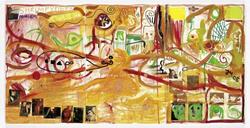 Regina Gallery welcomes Baby 'Kunst' (Metabolism Rock's), a collection of new works by Jonathan Meese, top-liner of new German art. Meese's aesthetics is impossible to pin up to one definite style or school. Revel of colours and patterns is a hardly decodable system of signs/badges, neologisms, symbols, and figurative allusions to all types of power seekers, mythical personages and geniuses of history, stars and starlets of pop culture, or fictional heroes of novels and films. Out of them, Meese creates his own universe inhabited by Caligula, Stalin, Scarlett Johannson, Marquis de Sade, Richard Wagner, Balthus, and Dr. No - to name just a few. Regina Gallery welcomes Baby 'Kunst' (Metabolism Rock's), a collection of new works by Jonathan Meese, top-liner of new German art. Meese's aesthetics is impossible to pin up to one definite style or school. Revel of colours and patterns is a hardly decodable system of signs/badges, neologisms, symbols, and figurative allusions to all types of power seekers, mythical personages and geniuses of history, stars and starlets of pop culture, or fictional heroes of novels and films. Out of them, Meese creates his own universe inhabited by Caligula, Stalin, Scarlett Johannson, Marquis de Sade, Richard Wagner, Balthus, and Dr. No - to name just a few.
Regina |
|
|
|
|
|
|
A new Proun Gallery’s project "Needlework" presents a visual exploration of embroidery crafted by many artists in the early XX century as well as by modern artists who enthusiastically use embroidery techniques.
Proun Gallery |
|
|
|
|
| Nicolas Reeves: Cloud Harp (Canada) Installation |
|
|
|
|
Canadian artist, architect and physicist Nicolas Reeves created a "Cloud Harp" for Laboratoria Art & Science Space's patio. His device scans heavenly bodies within 8-km radius and produces sounds that anyone can hear (even the tone-deaf) whatever music and philosophy he or she prefers. The meteo-electronical installation resembling a sculptural tower made of drawers with the weird holes, is equipped with a telescope, infrared beam for scanning clouds in atmosphere and some special device that transforms data on speed, distance, temperature and other physical properties of the sky into digital abstraction that is by-turn transformed into music - the whole process is done on-line. The organisers claim the "harp" to sing in different voices 24 hours a day and keep silent only when the sky is absolutely clear. This music is minimalism made by the nature itself. This Laboratoria Art & Science Space's project seems to be the first to completely live up to the venue's concept - symbiosis of science and art.
Laboratoria Art & Science Space |
|
|
|
|
|
|
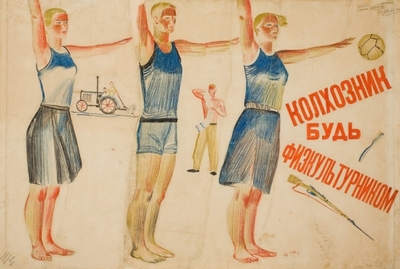 The exhibition devoted to the Russian placard's history reflects the major landmarks of life in Russia in the XX century. Among 180 compositions of the exposition are works by the XX century's classics including unique originals - drafts and stencils of placards by the major propaganda agencies of the Soviet Union. Recent works reveal the trends of further Russian placard's development. The items covering about 90 years of the Soviet and post-Soviet history are grouped by genres: political and propaganda placards of the Civil War (1917-1923), industrialization and collectivization period, Great Patriotic War and "thaw", theatre, cinema and circus posters, advertising posters, conceptual posters of the last decade. The best masters of placard graphics responded to the call of their time, adopted easily art-innovations and put esthetic trends of their epoch into practice. That's why this exhibition emphasizes the stages of the Russian art style's evolution through the placard's history. The exhibition devoted to the Russian placard's history reflects the major landmarks of life in Russia in the XX century. Among 180 compositions of the exposition are works by the XX century's classics including unique originals - drafts and stencils of placards by the major propaganda agencies of the Soviet Union. Recent works reveal the trends of further Russian placard's development. The items covering about 90 years of the Soviet and post-Soviet history are grouped by genres: political and propaganda placards of the Civil War (1917-1923), industrialization and collectivization period, Great Patriotic War and "thaw", theatre, cinema and circus posters, advertising posters, conceptual posters of the last decade. The best masters of placard graphics responded to the call of their time, adopted easily art-innovations and put esthetic trends of their epoch into practice. That's why this exhibition emphasizes the stages of the Russian art style's evolution through the placard's history.
Tretyakov Gallery at Krymsky Val |
|
|
|
|
| Treasures of Dyagilev Seasons |
|
|
|
|
The exhibition at the Museum of Arts and Crafts, timed to the 100th anniversary of the first performance of "Russian Ballets" in the Paris Châtelet-Les Halles, presents the-first-time-exhibited costumes to the plays of Dyagilev Seasons: "Le Sacre du printemps", "The Firebird", "Dark Blue God", "The Nightingale's Song", "Scheherazade" as well as the great Tamara Karsavina's pointes she wore dancing Columbine's part of Schumann's ballet "Carnival". The costumes were designed with the drafts by Léon Bakst, N. Roerich, A.Golovin, A. Matisse.
Museum of Decorative and Applied Arts |
|
|
|
|
|
| June |
| | |
10 |
11 |
12 |
13 |
14 |
15 |
16 |
17 |
18 |
19 |
20 |
21 |
22 |
23 |
24 |
25 |
26 |
27 |
28 |
29 |
30 |
| July
|
| | |
1 |
2 |
3 |
4 |
5 |
6 |
7 |
8 |
9 |
|
|

 The virtual community for English-speaking expats and Russians