|
|
|
| | Arts Calendar / March 2 / Exhibitions |
|
|
|
|
|
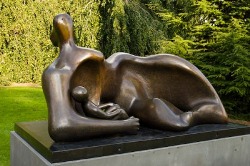 Born in 1098, Henry Moore was the most celebrated sculptor of his time, and the second part of his career, in particular, demonstrated that Modernist sculpture was, after all, surprisingly adaptable to official needs. In this sense, Moore was the contemporary equivalent of the great Neo Classical sculptors such as Canova and Thorwaldsen. Today Moore is internationally famous for his powerful, monumental sculptures. His preferred subjects were human figures made in wood, stone, bronze, cement and terracotta in a realistic or abstract manner. The Kremlin's Assumption Belltower and Patriarch's Palace will be host to a selection of sculptures, drawings and tapestries from the Foundation collection, supplemented by key loans from both public and private collections. It will be a rare chance to see three of Moore's stunning large-scale tapestries outside Perry Green, his former home. The exhibition will span Moore's career, from early carvings in stone, wood and marble, through drawings and tapestries to later iconic sculptures of the 1980s. Many important works including Moore's Bird Basket have never been shown in Russia before. The exhibition is organised by The Henry Moore Foundation and The Kremlin Museums in collaboration with the British Council. Born in 1098, Henry Moore was the most celebrated sculptor of his time, and the second part of his career, in particular, demonstrated that Modernist sculpture was, after all, surprisingly adaptable to official needs. In this sense, Moore was the contemporary equivalent of the great Neo Classical sculptors such as Canova and Thorwaldsen. Today Moore is internationally famous for his powerful, monumental sculptures. His preferred subjects were human figures made in wood, stone, bronze, cement and terracotta in a realistic or abstract manner. The Kremlin's Assumption Belltower and Patriarch's Palace will be host to a selection of sculptures, drawings and tapestries from the Foundation collection, supplemented by key loans from both public and private collections. It will be a rare chance to see three of Moore's stunning large-scale tapestries outside Perry Green, his former home. The exhibition will span Moore's career, from early carvings in stone, wood and marble, through drawings and tapestries to later iconic sculptures of the 1980s. Many important works including Moore's Bird Basket have never been shown in Russia before. The exhibition is organised by The Henry Moore Foundation and The Kremlin Museums in collaboration with the British Council.
Moscow Kremlin Museums  |
|
|
|
|
|
|
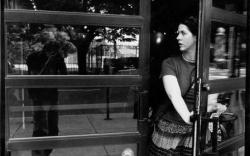 Alongside with such famous photographers as Garry Winogrand and Diane Arbus, Lee Friedlander was the one to transform American documentary photography in the 1960's and take it to the next level. Working primarily with 35mm cameras and black and white film, Friedlander evolved an influential and often imitated visual language of urban "social landscape," with many of the photographs including fragments of store-front reflections, structures framed by fences, posters and street-signs. By the late 1970's he became one of the most penetrating photographers of American cities. His unique images feature frequently broken, disrupted, or complicated surfaces; jut forward objects, obscuring others. Mirrors and windows in his pictures reflect and refract events already in flux. Through his oblique take on the social and visual fabric of townscapes, unexpected patterns and social processes emerge. Alongside with such famous photographers as Garry Winogrand and Diane Arbus, Lee Friedlander was the one to transform American documentary photography in the 1960's and take it to the next level. Working primarily with 35mm cameras and black and white film, Friedlander evolved an influential and often imitated visual language of urban "social landscape," with many of the photographs including fragments of store-front reflections, structures framed by fences, posters and street-signs. By the late 1970's he became one of the most penetrating photographers of American cities. His unique images feature frequently broken, disrupted, or complicated surfaces; jut forward objects, obscuring others. Mirrors and windows in his pictures reflect and refract events already in flux. Through his oblique take on the social and visual fabric of townscapes, unexpected patterns and social processes emerge.
Multimedia Art Museum |
|
|
|
|
| Valentin Serov: Life Line |
|
|
|
|
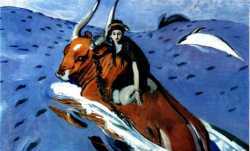 Valentin Serov, a key-person of Russian art on the turn of the 19th – 20th century, gained his world popularity due to his portrait works. Among his mostly well-known works are: Portrait of the Actress Maria Yermolova (1905), Portrait of Henrietta Girshman (1907), Portrait of Ida Rubenstein (1910), Portrait of Princess Olga Orlova and others. Creating his works, Serov concentrated mainly on the development of light and color, the complex harmony of reflections, the sense of atmospheric saturation, and the fresh picturesque perception of the world. A fruitful artist, Serov created a large number of vivid paintings and drawings. Drawing took a special place in his art. The exhibition presents about 250 pastels, temperas, sanguines, charcoals,watercolours and artist’s engravings. Exposition shows the artist’s evolution and gives a possibility to follow his work from the beginning till the end. Read more Valentin Serov, a key-person of Russian art on the turn of the 19th – 20th century, gained his world popularity due to his portrait works. Among his mostly well-known works are: Portrait of the Actress Maria Yermolova (1905), Portrait of Henrietta Girshman (1907), Portrait of Ida Rubenstein (1910), Portrait of Princess Olga Orlova and others. Creating his works, Serov concentrated mainly on the development of light and color, the complex harmony of reflections, the sense of atmospheric saturation, and the fresh picturesque perception of the world. A fruitful artist, Serov created a large number of vivid paintings and drawings. Drawing took a special place in his art. The exhibition presents about 250 pastels, temperas, sanguines, charcoals,watercolours and artist’s engravings. Exposition shows the artist’s evolution and gives a possibility to follow his work from the beginning till the end. Read more
Tretyakov Art Gallery |
|
|
|
|
|
|
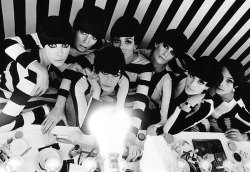 "William Klein's pictures, like Klein himself, never quite seemed to belong. Perhaps in his dreams he secretly wanted them to, feeling it unjust that his work hadn't been widely enough recognized. Yet his pictures, which began as a furious protest against the establishment, influenced a whole generation of photographers." John Heilpern, "William Klein: Photographs". Klein, who turns 75 this year, was born in NYC, but moved to Paris at a young age and still calls Paris home. He studied with Fernand Leger, worked for Vogue, made a documentary on Muhammad Ali but is most well known for pushing photographic technique to it's limits. As an artist using photography, William Klein set out to re-invent the photographic document. His photos, often blurred or out of focus, his high-contrast prints (his negatives were often severely over-exposed), his use of high-grain film and wide angles shocked the established order of the photography world and he earned a reputation as an anti-photographer's photographer. Inspired by moholy-nagy and kepes, he also experimented with juxtaposing abstract painting and photography. "William Klein's pictures, like Klein himself, never quite seemed to belong. Perhaps in his dreams he secretly wanted them to, feeling it unjust that his work hadn't been widely enough recognized. Yet his pictures, which began as a furious protest against the establishment, influenced a whole generation of photographers." John Heilpern, "William Klein: Photographs". Klein, who turns 75 this year, was born in NYC, but moved to Paris at a young age and still calls Paris home. He studied with Fernand Leger, worked for Vogue, made a documentary on Muhammad Ali but is most well known for pushing photographic technique to it's limits. As an artist using photography, William Klein set out to re-invent the photographic document. His photos, often blurred or out of focus, his high-contrast prints (his negatives were often severely over-exposed), his use of high-grain film and wide angles shocked the established order of the photography world and he earned a reputation as an anti-photographer's photographer. Inspired by moholy-nagy and kepes, he also experimented with juxtaposing abstract painting and photography.
Multimedia Art Museum |
|
|
|
|
|
| June |
| |
9 |
10 |
11 |
12 |
13 |
14 |
15 |
16 |
17 |
18 |
19 |
20 |
21 |
22 |
23 |
24 |
25 |
26 |
27 |
28 |
29 |
30 |
| July
|
| | |
1 |
2 |
3 |
4 |
5 |
6 |
7 |
8 |
|
|

 The virtual community for English-speaking expats and Russians